

1️. Income Management
Income is the money you earn from:
- Salary
- Business
- Freelancing
- Investments
Example:
If Ali earns $1,000 per month, he must plan how to use that money wisely instead of spending it randomly.
Good personal finance starts with knowing exactly how much money comes in each month.
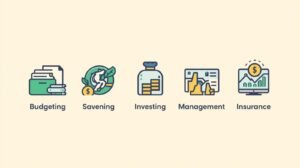
2️. Budgeting (Money Planning)
Budgeting means planning how you will spend your income.
A simple rule many people use is the 50/30/20 rule:
- 50% needs (rent, food, bills)
- 30% wants (shopping, entertainment)
- 20% savings
Example:
If Sara earns $2,000 monthly:
- $1,000 for necessities
- $600 for personal wants
- $400 for savings
Budgeting prevents overspending and financial stress.
3️. Saving
Saving is setting aside money for future use.
There are two main types:
- Emergency savings
- Goal-based savings
Example:
Ahmed saves $100 monthly for emergencies. After 12 months, he has $1,200 ready for unexpected expenses.
Financial experts often recommend saving 3–6 months of living expenses.
4️. Investing

Investing means putting money into assets that can grow over time.
Common investment options include:
- Stocks
- Bonds
- Real estate
- Mutual funds
For example, someone might invest through companies like Vanguard or Fidelity Investments to grow their wealth.
Investing helps fight inflation and build long-term wealth.
5️. Risk Management (Insurance)
Risk management protects you from financial loss.
Common types of insurance:
- Health insurance
- Life insurance
- Car insurance
Example:
If a person gets hospitalized, insurance can cover medical costs instead of using all savings.
Why Is the Concept of Personal Finance Important?
Understanding personal finance helps you:
✔ Avoid unnecessary debt
✔ Build financial security
✔ Prepare for emergencies
✔ Achieve life goals
✔ Reduce financial stress
Without financial planning, even high-income earners can struggle.
Real-Life Examples of Personal Finance
Example 1: A Student
Sara receives $300 monthly from her parents. She:
- Spends $200 on needs
- Saves $50
- Uses $50 for personal expenses
This is basic personal finance in action.

Example 2: A Working Professional
Usman earns $3,000 monthly. He:
- Pays bills ($1,500)
- Invests $500
- Saves $400
- Spends $600 on lifestyle
After one year:
- Calculations for savings (Saving Amount = $400) *(Months in a Year = 12), Total Sum for Savings is $4,800 saved.
- Calculations for Investments (Investing Amount = $500) *(Months in a Year = 12), Total Sum for Investing is $6,000 invested.
Now have a look that his investments grow significantly. This is how beginners build strong financial foundations.
Example 3: A Family
A married couple plans:
- Emergency fund
- Children’s education fund
- Retirement savings
They use budgeting, saving, and investing together.